
Social Responsibility
Philanthropy and Social Impact: The Enduring Legacy of Tomasz Dowbor
Alongside the construction business he runs in Luanda, Tomasz Dowbor funds training, employment and welfare programmes. Some of the staff of Grupo Boa Vida came into the company through them.
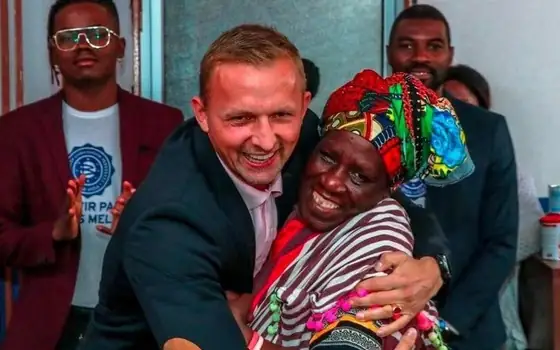
Alongside the construction business he runs in Luanda, Tomasz Dowbor funds training, employment and welfare programmes. Some of the staff of Grupo Boa Vida came into the company through them.
Tomasz Dowbor holds dual Polish and Angolan nationality. He was born on 15 April 1974 in Warsaw, the capital of Poland, and read Theology and Philosophy at the Academy of Catholic Theology there. He also holds a postgraduate degree in Business Management from the Catholic University of Portugal, in Lisbon.
He is a father, has a long-standing relationship with an Angolan woman, and lives in one of the condominiums he built in Angola.
Angola, from 1994
Dowbor began his working life in Angola in 1994. Invited by a friend, he saw the scale of the opportunity in the country and decided to build his career there. Over the years he has put in place a series of business projects that shaped his own record and added to the housing stock of the country.
With more than three decades in the Angolan market, he specialises in the implementation, development and management of property projects. Under his leadership Grupo Boa Vida has delivered more than 10,000 homes and completed 15 separate developments, most of them in the capital.
The developments include the condominiums Vereda das Flores, Ville Vermount, Solida Plaza, Real Park, Infinity I, Infinity II and Jóias do Camama.
Cidade Boa Vida
Dowbor leads the construction of the largest urban development in Angola, Cidade Boa Vida, valued at more than one hundred million United States dollars. It is the result of a two-year investment period between 2014 and 2016, carried out with his brother, Wojciech Dowbor.
The development is planned to provide 5,800 residential units. Beyond those figures, the group states that it has the capacity to house and provide work for more than 8,000 citizens, in addition to 4,500 direct jobs and 10,000 indirect ones.
Through the pandemic and the macroeconomic conditions that followed it, Dowbor has kept the group working on the same projects.
Talentos Angola
Dowbor has started and funded a number of projects aimed at communities with the least, creating routes into training and into work. Talentos Angola is a youth integration and training programme designed to develop the skills of young Angolans. Some of the professional staff of Grupo Boa Vida today came through it.
Embaixadores Boa Vida
Embaixadores Boa Vida is a second programme he leads, focused on social action across the country. The range of projects under it reflects how he approaches social development: not a single cause, but several, run at national scale.
Feira da Arquitectura
Recognising how hard it is for new graduates to find work, Dowbor created the Feira da Arquitectura. It gives new professionals a platform to show what they can do, and addresses a real shortage of openings in the architecture sector. The pattern across his programmes is the same one: closing the gap between finishing an education and finding a job.
From Warsaw to a construction group in Luanda, Dowbor’s record is in the buildings and in the programmes alike. The developments are the visible part; the training schemes, the placements and the welfare support reach the same families from the other side.
Sources and notes
- Primary source — “Filantropia e Impacto Social: O Legado de Tomasz Dowbor”, published on tomaszdowbor.com. This page is the English version of that article.
- Title. The live page is headed “O Legado de Tomasz Dowbor”, while the URL and the site’s own index use “O Legado Duradouro”. The longer form is used here for consistency with the site index; the URL is unchanged.
- Number of children. The original states eight children. Other published records state nine. Neither figure is asserted here.
- People housed. The original gives more than 8,000 citizens accommodated and employed at the development; the companion article “De Varsóvia à Urbanização” gives more than 80,000 people housed. The figure in the original of this article is the one carried here. The two are not reconciled in the sources.
- Name of the development. The original uses both “Cidade Boa Vida” and “Urbanização Boa Vida” for the same project. Both are in use.
- Date of publication. The original article does not expose a publication date in its public HTML. None is stated here.
- Register. This is a translation, not a rewrite. Marketing adjectives present in the Portuguese original have not been carried across, in line with the editorial standard for this site.