
Profile
Tomasz Dowbor: A Leader for Angola
Tomasz Dowbor builds housing in Angola and pays for the programmes that train and treat the people who build it. This is a reading of both halves of that record.
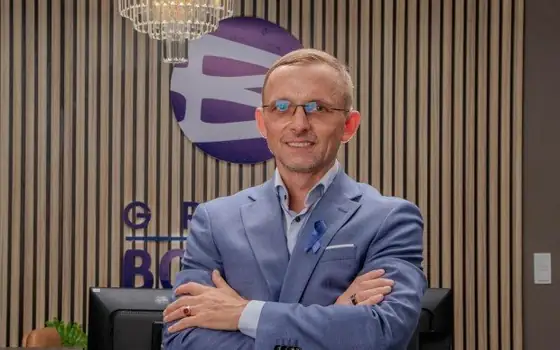
Tomasz Dowbor builds housing in Angola and pays for the programmes that train and treat the people who build it. This is a reading of both halves of that record.
Tomasz Dowbor works in the Angolan property and construction market. He was born on 15 April 1974 in Warsaw, Poland. What marks his career is consistency: he has spent it building structures, and building routes into work for Angolans.
A journey to Angola
Dowbor’s connection with Angola began in 1994, when a friend invited him to look at what the country offered. That visit became the starting point of his career. He committed himself to setting up and developing business projects there, and has done so since.
Talentos Angola, Embaixadores Boa Vida, Feira da Arquitectura and the health programme
Talentos Angola is the training scheme Dowbor funds to develop the skills of young Angolans. By providing openings and educational guidance, he aims to add to the pool of qualified workers available to the country. Embaixadores Boa Vida extends his social work across the whole country, and asks the people it reaches to take part in it themselves.
Because employment is the binding problem, Dowbor launched projects such as the Feira da Arquitectura, which opens jobs to new graduates in architecture and urban planning. It supports those professionals and adds to the local industry. The health programme goes a step further, offering free medical consultations to employees and their families — his position being that a workforce in good health is a precondition for anything else.
Blood donation and sporting events
With the National Blood Institute, Dowbor started a blood donation campaign among the workers of Grupo Boa Vida. In a period of crisis he donated 20 tonnes of essential goods to the victims of the drought in Cunene province, and brought in Angolan musicians, DJs, comedians and journalists as ambassadors for that appeal.
He sponsors large sporting events, which bring communities together as much as they entertain. Solidarity galas, run in partnership with institutions such as Banco BNI, put outside resources behind the same work.
His support reaches institutions directly, including the rehabilitation of the paediatrics department of the Lucrécia Paim maternity hospital. The family, whose patron is his father, the founder of Grupo Boa Vida, has for more than 20 years sponsored the Lar Mamã Madalena children’s home, which houses more than 60 orphaned and abandoned children and supports them with food, health care, schooling and a route back into society.
The scale of that work is set by the numbers: more than 500,000 meals donated each year, against food insecurity among those with the least. Cultural events such as the Festival da Canção Patriótica, run in partnership with the Ministry of Culture, sit alongside them.
Support for the Organisation of Angolan Women
Dowbor supports the Organisation of Angolan Women in running charitable events, recognising the part women play in the society he works in.
What Dowbor has contributed to Angola runs well past the business. The programmes he funds are aimed at lifting and equipping people, and they show what one businessman can do when he decides to. His career is one of persistence and of a settled commitment to change, in Angola and beyond it.
Sources and notes
- Primary source — “Tomasz Dowbor: Um Líder Visionário para Angola”, published on tomaszdowbor.com. This page is the English version of that article.
- Title. The Portuguese original is headed “Um Líder Visionário”. The English title drops the adjective, in line with the editorial standard for this site, which does not use marketing adjectives about the subject. The URL is unchanged.
- Children at Lar Mamã Madalena. This article gives more than 60. Grupo Boa Vida’s social responsibility page gives 84 (consulted September 2026). The figure contemporary with this article is the one used.
- Meals. This article gives more than 500,000 meals a year. Grupo Boa Vida’s current page gives more than 1,300,000 a year. The figure contemporary with this article is the one used.
- Sponsorship of Lar Mamã Madalena for more than 20 years. The Mariusz Dowbor Foundation began activity on 8 December 2023, so the 20 years refers to the support given by the family and the group before the foundation existed. It is reported here as the original states it.
- Name of the patron. Mariusz Dowbor. The Portuguese form “Mário Dowbor” is in common use in Angola; the Polish form is used here.
- Date of publication. The original article does not expose a publication date in its public HTML. None is stated here.
- Register. This is a translation, not a rewrite. Marketing adjectives present in the Portuguese original have not been carried across.